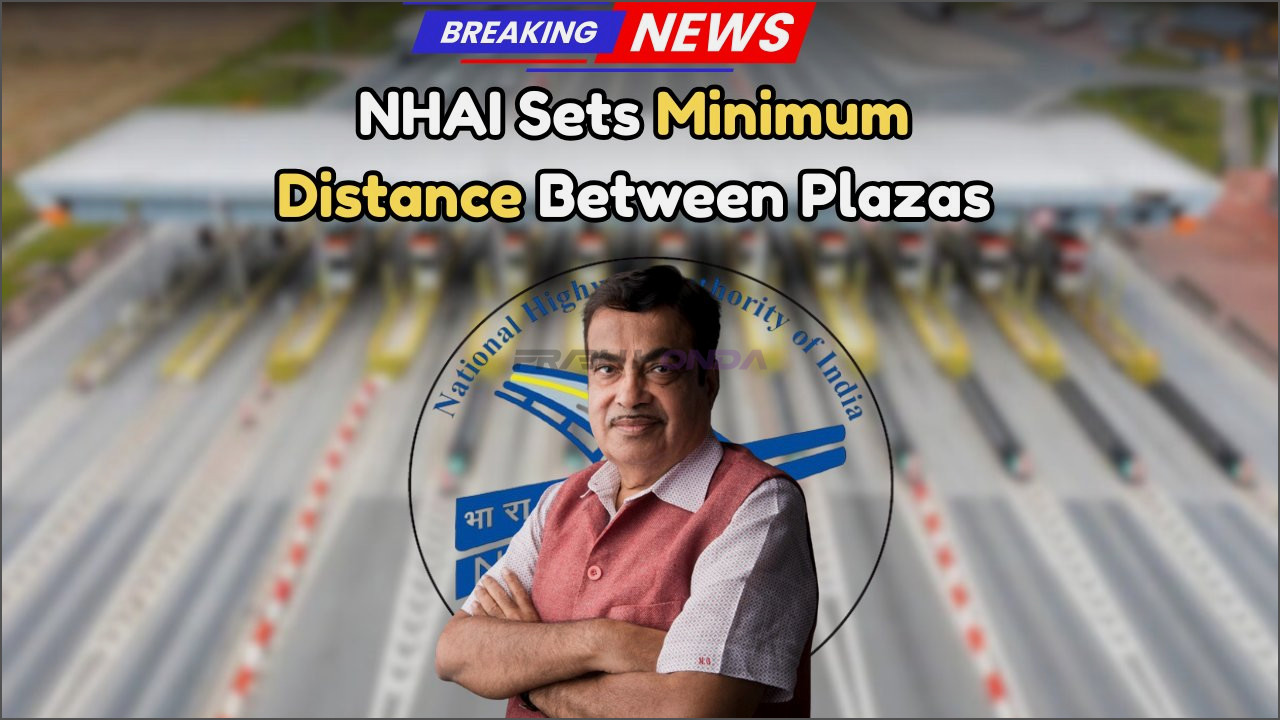
Nationwide Toll Reform: The National Highways Authority of India (NHAI) has introduced a significant change in its policy regarding the placement of toll plazas across the country. This reform sets a new minimum distance rule aimed at improving the efficiency of travel on national highways.
NHAI’s New Distance Rule for Toll Plazas
Background: The NHAI’s decision comes after extensive consultations and studies aimed at optimizing the toll collection system in India, ensuring smoother and faster commutes for motorists.
Key Elements of the Reform:
- The minimum distance between two toll plazas on a national highway is now mandated to be 60 kilometers.
- This rule is applicable to all new highway projects under planning and execution.
- Existing toll plazas may be relocated or adjusted according to feasibility studies.
- The reform aims to reduce congestion and provide uninterrupted travel experience for long-distance travelers.
- Implementation of electronic toll collection is also being accelerated.
Expected Benefits for Commuters
This reform is poised to bring multiple benefits to drivers and the logistics sector by minimizing travel disruptions and improving road safety.
- Reduced travel time due to fewer stops at toll plazas.
- Decrease in fuel consumption as vehicles can maintain a consistent speed.
- Enhanced road safety with less frequent deceleration and acceleration near toll booths.
- More predictable travel schedules for logistics companies.
Challenges in Implementing the Reform
While the reform is promising, it does come with its set of challenges that need to be addressed for successful implementation.
| Challenge | Details | Impact |
|---|---|---|
| Land Acquisition | Adequate land must be acquired for relocation or expansion of toll plazas. | Could delay project timelines. |
| Technological Integration | Updating systems to accommodate electronic toll collection. | Requires investment and training. |
| Public Awareness | Informing the public about new toll rules and locations. | Necessary for smooth transitions. |
| Coordination with State Authorities | Ensuring state governments are aligned with new policies. | Important for unified implementation. |
| Financial Implications | Cost associated with restructuring and technology upgrades. | Needs budget allocation and management. |
| Environmental Concerns | Assessing impact on local ecology during construction. | Critical for sustainable development. |
| Resistance from Stakeholders | Gaining support from local communities and businesses. | Essential for project acceptance. |
| Infrastructure Readiness | Ensuring roads are equipped for increased traffic flow. | Vital for safety and efficiency. |
How NHAI Plans to Overcome These Challenges
NHAI has laid out strategies to tackle the potential hurdles in the implementation of the toll reform.
- Engaging in dialogue with state governments and local authorities.
- Conducting environmental impact assessments prior to construction.
- Launching public awareness campaigns through various media channels.
- Ensuring robust infrastructure development before implementing changes.
Strategic Initiatives:
- Partnerships with technology firms to enhance electronic toll collection systems.
- Regular monitoring and evaluation of toll plazas for compliance.
- Setting up feedback mechanisms for commuters to report issues.
- Leveraging data analytics to optimize toll plaza locations.
Future Prospects of Toll Reform in India
The nationwide toll reform is set to revolutionize the way toll collection is perceived and managed in India.
| Aspect | Future Outlook |
|---|---|
| Travel Time | Expected to decrease significantly |
| Fuel Efficiency | Improved due to fewer stoppages. |
| Road Safety | Enhanced with less congestion. |
| Economic Impact | Positive with more efficient logistics. |
| Environmental Benefits | Reduction in emissions from idling vehicles. |
| Public Satisfaction | Likely to increase with smoother travel. |
| Technological Advancement | Driven by adoption of smart tolling solutions. |
The NHAI’s minimum distance rule for toll plazas marks a significant step forward in India’s transportation policy, promising to enhance efficiency and transform the commuter experience across national highways.